7 Signs You Have Hidden Water Damage in Your Home
Water damage doesn't always announce itself with a flooded basement or a burst pipe. More often, it hides — quietly working behind walls, under floors, and above ceilings for weeks or months before anyone notices. By the time it becomes visible, the damage is usually far worse than it would have been if caught early.
Your Water Bill Has Crept Up for No Obvious Reason
If your household habits haven't changed but your water bill keeps climbing, a hidden leak is one of the most likely culprits. Even a slow, steady drip inside a wall can waste hundreds of gallons per month — and that water has to go somewhere.
Check your water meter when no water is in use. If the dial is still moving, you have a leak somewhere in the system. It may be a supply line, a toilet flapper, or a pipe connection behind drywall. If you've confirmed a leak but can't locate it, our water damage restoration team can identify the source using moisture meters and thermal imaging before it becomes a much larger problem.
You Smell Musty or Earthy Odors — Especially in Certain Rooms
A persistent musty smell that doesn't go away after cleaning or airing out a room is one of the most reliable early indicators of hidden moisture. That odor is the byproduct of mold and mildew actively growing in a damp environment — often inside walls, under flooring, or in a crawl space below the room.
The smell is frequently strongest near baseboards, in closets along exterior walls, under sinks, or in finished basements. If the odor keeps returning every time conditions get humid, there's almost certainly an active moisture source nearby. Learn more about what to watch for in our guide to mold prevention and early detection.
Paint or Wallpaper Is Bubbling, Peeling, or Blistering
Paint and wallpaper are surprisingly good at signaling when something is wrong behind them. When moisture seeps into drywall, it disrupts the bond between the surface and whatever is covering it — causing bubbling, peeling, or soft blistering that can't be fixed with a fresh coat of paint.
This is especially common on exterior walls, around windows, near bathroom fixtures, and on ceilings below a bathroom or laundry room on the floor above. If the paint keeps failing in the same spot, the problem isn't the paint — it's what's behind it.
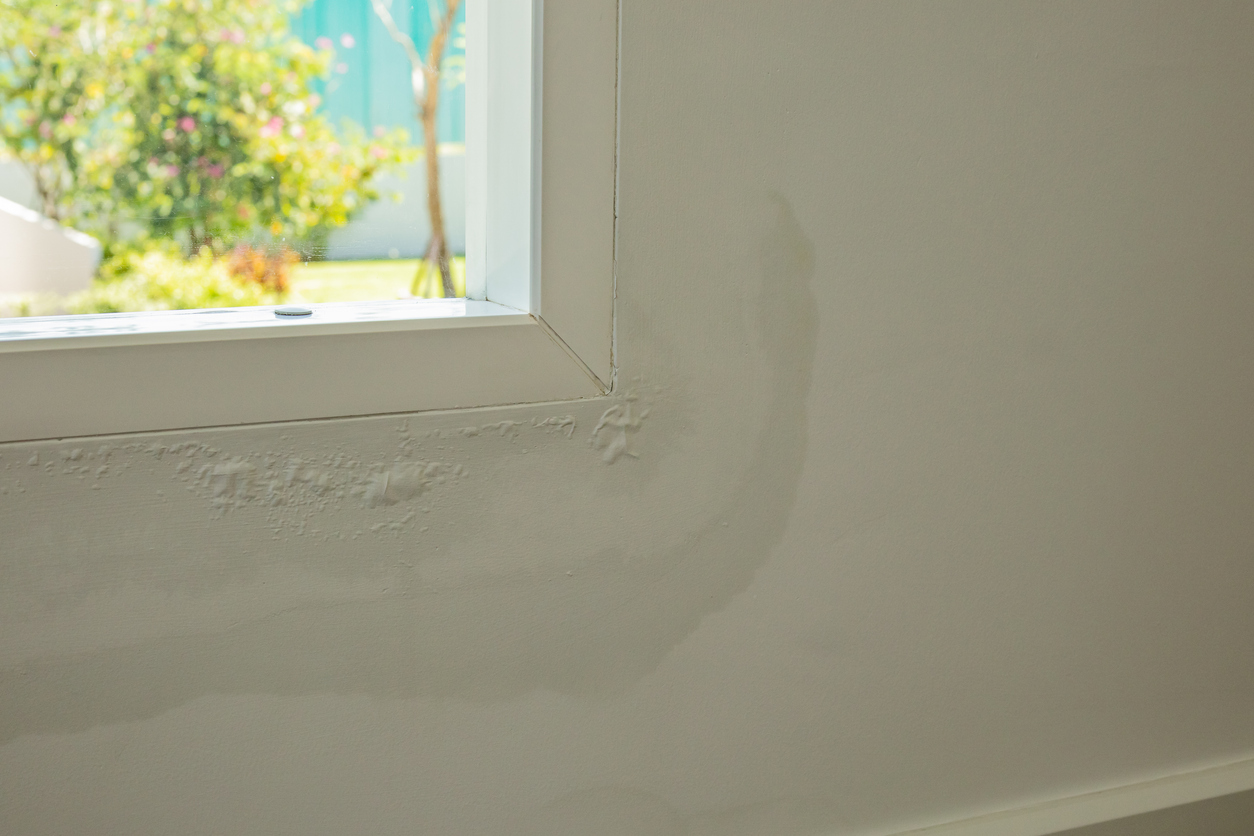
Recurring paint failure in the same spot is almost always a moisture issue, not a paint quality issue.
Your Floors Are Warping, Buckling, or Feel Soft Underfoot
Hardwood floors that cup, warp, or develop gaps between boards are reacting to moisture — either from a leak above, a plumbing issue below, or elevated humidity in a crawl space. Tile floors that crack or loosen at the grout lines are often responding to a compromised subfloor that has absorbed water and begun to shift.
The most telling sign is a floor that feels spongy or soft when you walk across it, particularly near a bathroom, kitchen, or exterior door. That softness usually means the subfloor itself has been saturated — and in more advanced cases, the structural framing beneath it as well.
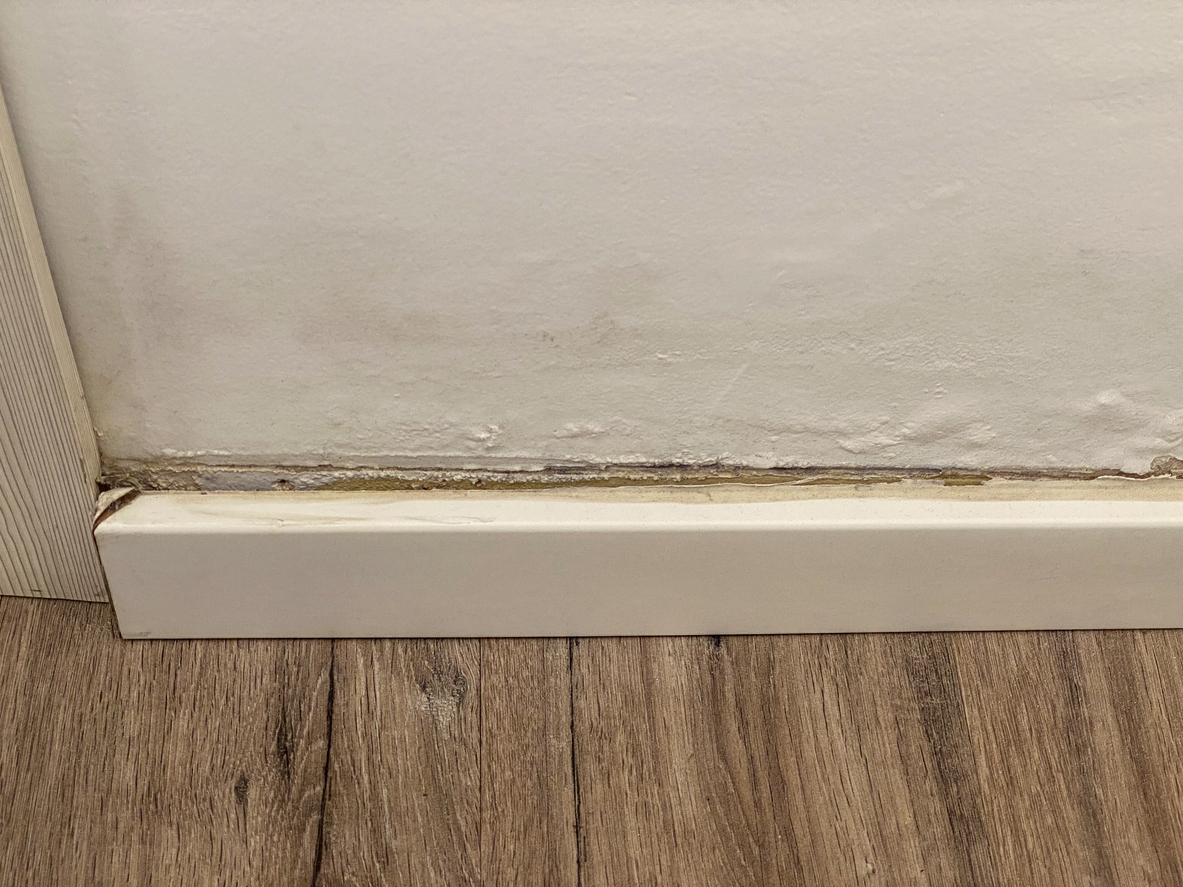
Cupping or buckling at the baseboard is a direct response to moisture — often from a source that isn't immediately obvious.
You Notice Staining or Discoloration on Ceilings and Walls
Yellow, brown, or rust-colored stains on a ceiling or wall are almost always the result of water that traveled from a source somewhere above or behind the stained area. The stain itself is often the dried mineral residue left after water evaporated — which means the leak may have already stopped, or it may be ongoing and simply drying between cycles.
Don't assume the source of the leak is directly above the stain. Water follows the path of least resistance and can travel along joists, pipes, and framing before finally breaking through a surface several feet from where it entered. If you've spotted staining after recent severe weather, see our storm damage resource for next steps.
You Can See Rust, Corrosion, or Mineral Buildup on Pipes
Visible pipes under sinks, in utility rooms, and in unfinished basements can give you direct evidence of a moisture problem. Rust spots, green oxidation on copper fittings, or white chalky mineral deposits around joints and connections all indicate that water is consistently present where it shouldn't be — either from a slow leak or from condensation that never fully dries.
These signs don't mean the pipe is necessarily about to fail, but they do mean moisture has been accumulating in that area long enough to leave a mark. That moisture affects the surrounding structure too, not just the pipe.
Mold Is Appearing in Low-Traffic Areas
Small mold spots in a heavily used bathroom are common and relatively easy to manage. But mold appearing in areas that aren't regularly wet — inside a closet, along a baseboard in a bedroom, in a corner of a finished basement — is a red flag that a hidden water source is feeding it.
Mold requires three things to grow: organic material, warmth, and moisture. In a home, the first two are everywhere. If mold is growing somewhere unexpected, moisture is being supplied by something you haven't found yet. For every visible patch, there is often significantly more growing inside the wall cavity or floor system behind it. Our mold remediation specialists can assess the full extent and contain it before it spreads further.
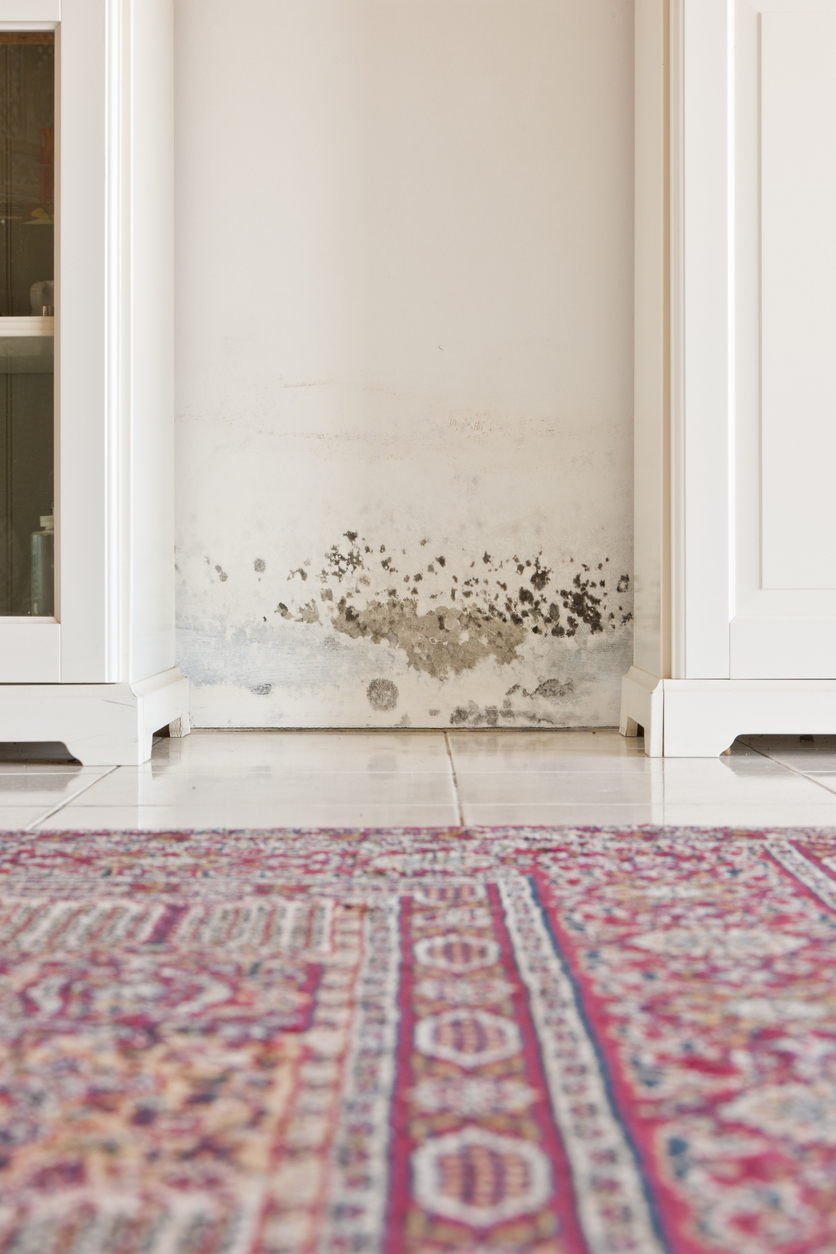
Mold in a dry area of the home almost always means there's a hidden moisture source behind the wall or under the floor.
How Long Does Hidden Water Damage Take to Cause Serious Problems?
Drywall begins to absorb moisture and weaken. Mold spores can begin germinating under the right conditions.
Mold colonies become established. Wood framing begins to soften. Flooring adhesives break down.
Structural damage to framing, subfloors, and joists becomes likely. Remediation scope and cost increase significantly.
Frequently Asked Questions
Concerned About Hidden Water Damage?
Don't wait until a small leak becomes a major repair. Our team uses thermal imaging and moisture meters to find exactly what's happening — without opening walls unnecessarily.