How Long Does It Take for a Flooded Floor to Dry?
A flooded floor usually takes 1–5 days to dry, depending on flooring type and water damage level. Learn the drying timeline and how to speed it up.
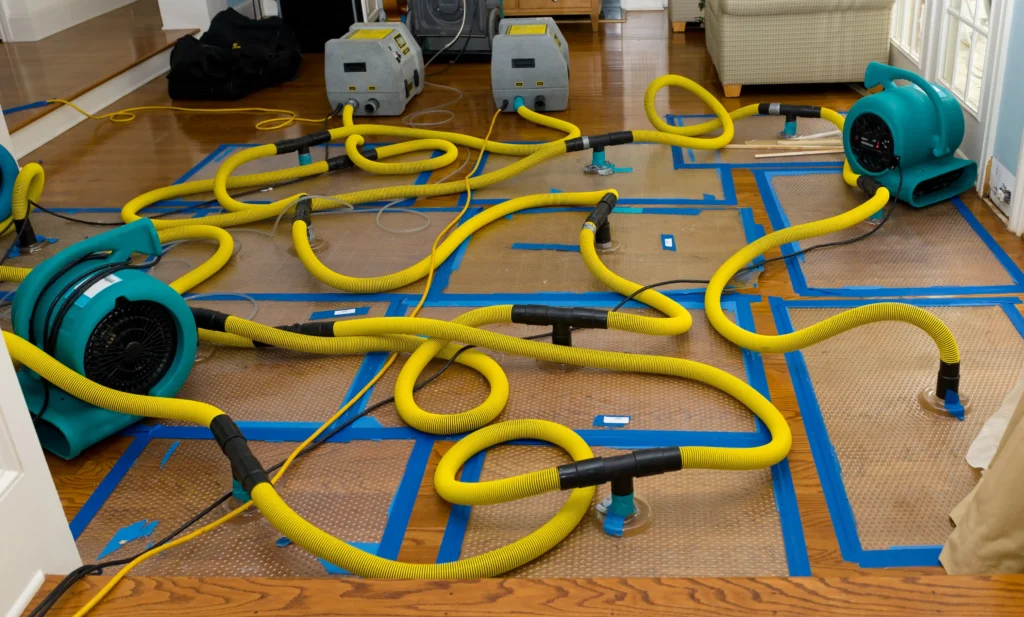
How Long Does It Take for a Flooded Floor to Dry?
When water is flooding your floors, getting rid of standing water is only the beginning. Moisture works its way under flooring, into carpet padding and underlayment, and can even make its way to the subfloor, where a mop and a box fan won’t accomplish much.
So, how long does it take for a flooded floor to dry? With fast water extraction and professional drying equipment, many water-damaged flooring systems can reach their drying goals in roughly 1–5 days.
However, excessive saturation or trapped moisture under flooring may extend the process. Speed is crucial, too. Drying water-damaged materials within 24–48 hours helps limit or outright prevent mold growth.
Flooded Floor Drying Timeline by Flooring Type
A flooded floor can take between 1–5 days to properly dry with expert water removal, strategic airflow, and dehumidification.
However, drying time and damage to structural integrity vary considerably depending on flooring material. Timelines are also affected by:
- The amount and type of water
- Indoor humidity
- Moisture in the subfloor
Severe flooding will likely take longer to dry completely.
A tile floor and a hardwood floor can hold the same puddle with very different outcomes. Since there isn’t a universal flooded floor drying time, use this table to tailor your expectations.
|
Flooring |
What to Expect |
|
Harwood |
Often takes several days or longer because wood absorbs moisture |
|
Laminate |
Possible swelling or separation may require replacement rather than drying in place |
|
Tile |
Surface dries quickly, but the grout, mortar, and subfloor may retain moisture |
|
Carpet |
Carpet, padding, and the floor underneath must all be evaluated and dried |
Hardwood Floors
Because hardwood is a porous material, moisture can penetrate the boards rather than simply pooling on top. Drying hardwood may take several days. This could turn into a week or more if the subfloor is wet.
Cupping, buckling, and gaps often indicate moisture-related damage.
And just because the wood feels dry under your socks doesn’t mean it’s actually dry. Moisture readings are a much better judge of wetness than your toes.
Laminate Floors
Laminate flooring can be particularly prone to flood damage and water damage because water may penetrate seams and cause the fiberboard core to swell. Once significant swelling or delamination occurs, affected areas of the floor may need to be replaced.
Tile Floors
Ceramic or porcelain tile itself is pretty good at repelling water, but that doesn’t mean the entire floor assembly is moisture-resistant. Water can spread through grout lines and reach mortar, underlayment, or the subfloor below.
Carpeted Floors
Carpet introduces another layer, literally. Both the carpet and carpet padding underneath act like sponges in the event of a flooded floor. EPA guidance notes that absorbent materials that can’t be thoroughly cleaned and dried need to be discarded, particularly after exposure to contaminated floodwater.
After significant flooding, don’t judge drying progress based solely on what you can see. Hidden moisture is often the more serious concern.
Factors That Affect How Fast a Floor Dries
How long a flooded floor takes to dry depends on these key factors.
Amount of Water & Depth of Flooding
A minor leak caught quickly differs greatly from several inches of standing water that soaked a room for hours. The longer materials remain exposed to water, the farther moisture finds its way into flooring and surrounding building materials.
The water source matters as well. Floodwater often contains sewage, bacteria, or chemical contaminants, making cleanup more complex than just drying everything out.
Humidity Levels
Water evaporates more slowly in humid conditions. That’s why professional structural drying typically tackles wet floors with air movers and dehumidifiers.
Keeping indoor humidity below 60% when possible is recommended, with a 30–50% range considered ideal for controlling indoor moisture.
Ventilation & Airflow
Efficient airflow helps moisture evaporate from wet materials, so increasing indoor circulation and temperature can speed up the drying process while restoration professionals use commercial air movers and dehumidifiers.
One important exception: if mold is already visible, don’t just point fans at it and call it a day. Fans can spread mold spores through the building, exacerbating the issue.
How to Tell If Your Floor Is Completely Dry
Before declaring the drying process complete, use a combination of moisture readings and physical signs to determine whether the floor has returned to a fully dry condition.
Moisture Meter Readings
Moisture meter readings are one of the most reliable ways to tell if your floors have been thoroughly dried.
Moisture meters help identify wet materials and determine when they’re sufficiently dry. Professional water damage technicians can also compare readings in affected and unaffected areas, creating a drying metric based on the materials involved.
No Musty Odor
A persistent musty smell is usually a clear sign that moisture or mold growth is hiding in a place you can’t see. Don’t try to mask it with perfume. Find the moisture source and remove it accordingly.
No Warping or Discoloration
Buckling, cupping, swelling, and discoloration are strong indicators that flooring has absorbed water. Even after drying, some materials may be beyond repair and require replacement.
“Looks dry” and “is dry” aren’t necessarily the same. Before ripping up flooring or tossing wet materials, confirm that the underlying structure has actually reached an appropriate moisture level.
How to Dry a Flooded Floor Faster
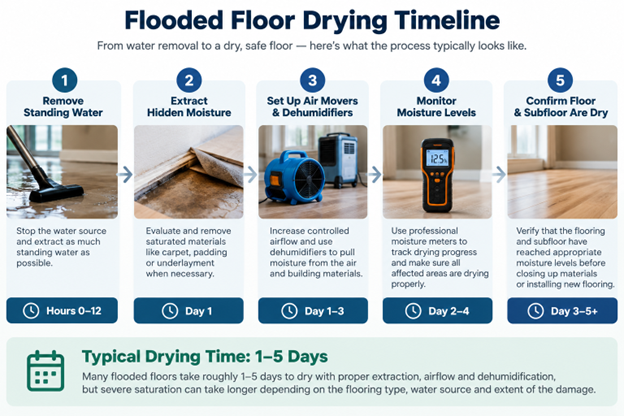
To dry a flooded floor fast, start with the water source and remove all standing water immediately.
Here’s what to do next:
- Extract as much water as possible from the flooring.
- Remove saturated materials that cannot be safely restored.
- Expose wet padding or subflooring when necessary.
- Increase controlled airflow across wet surfaces.
- Use dehumidifiers to pull moisture from the air.
- Monitor moisture levels instead of relying on touch.
- Keep the drying equipment operating until appropriate drying goals are reached.
For more serious water intrusion, commercial extraction equipment, high-capacity air movers, dehumidification, and moisture monitoring make the process considerably more controlled than the old “towel and floor fan” tactic.
What Happens If a Floor Doesn’t Dry Completely?
Leaving moisture trapped under floors can lead to mold, odors, damaged flooring, and wood decay. Mold growth is likely if affected areas of a flooded home aren’t completely dried within 1–2 days.
That’s why professional restoration goes deeper than removing visible water. Right-Now Restoration identifies hidden moisture, dries affected materials, and monitors moisture levels to help prevent further damage.
If your floors have flooded, our experts are available 24/7 for emergency water damage restoration to get the drying process started quickly.