Drywall Water Damage: What Happens & What to Do
Water-damaged drywall can weaken, swell, and grow mold within 24–48 hours. Learn what happens to drywall after a leak and when it needs replacing.
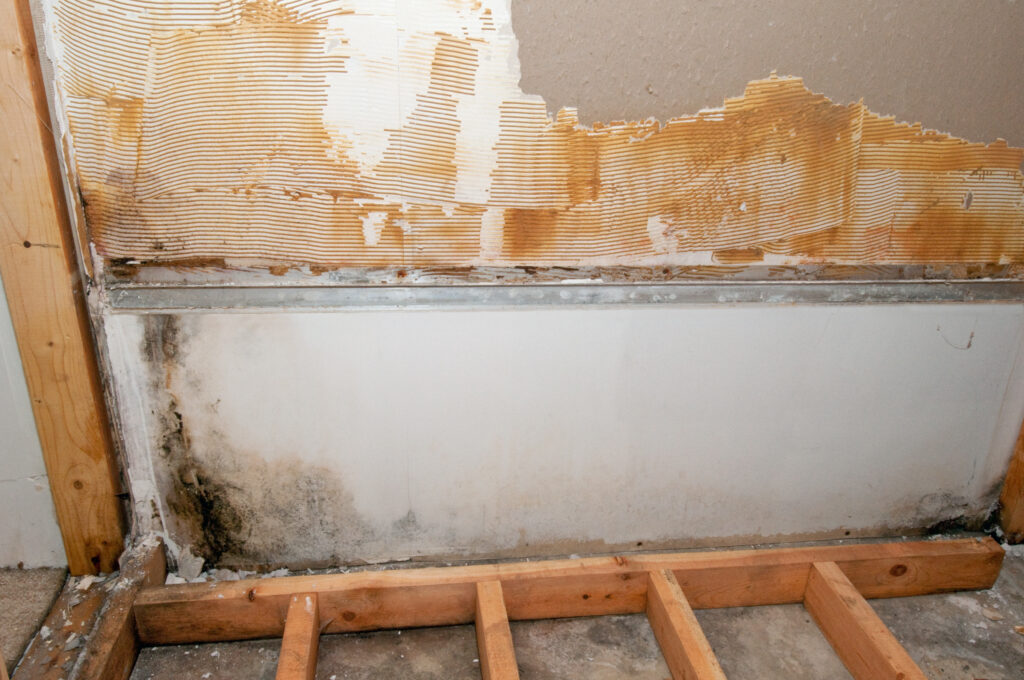
What Happens to Drywall After a Water Leak?
Drywall and water are about as complementary as peanut butter and hot sauce. Unfortunately, when a pipe bursts, a roof leaks, or an appliance overflows, your walls are on the frontline of the water damage war.
So, what happens to drywall after a water leak?
It absorbs moisture, which causes staining, swelling, structural weakening, and mold growth. While some wet drywall can be saved, other sections need to be replaced before the water damage spreads. The tricky part comes when water damage isn’t obvious. Your walls can look perfectly dry while moisture quietly wreaks havoc under the paint.
Here’s how drywall water damage progresses, what warning signs you need to look for, and how to determine whether your walls need drying or replacing.
Stages of Drywall Damage After a Water Leak
Water damage doesn’t follow a predictable timeline, but the longer your drywall stays wet, the bigger your risk of permanent damage grows.
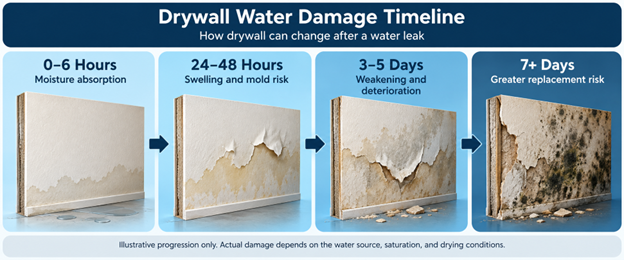
Water begins soaking into drywall within hours of a leak. Over the next day or two, drywall may swell, soften, and develop conditions that contribute to mold growth.
After several days, prolonged moisture can weaken drywall, increasing the need for replacement.
Within the First Few Hours
Drywall’s paper facing and gypsum core are like a sponge, especially around exposed edges and seams.
Early damage may include:
- Damp patches or faint discoloration
- Moisture spreading behind paint
- Slight swelling along seams or baseboards
Never assume a wall is dry because it looks or feels dry. Moisture meters and leak detectors can identify hidden dampness that a quick touch test might miss.
24–48 Hours
The longer moisture hangs around, the more drywall loses strength. Paint starts to bubble, seams swell, and the paper facing becomes a potential breeding ground for mold.
According to the EPA, water-damaged materials should be dried within 24–48 hours to help prevent mold growth.
After 3–5 Days
At this point, prolonged saturation starts causing more obvious damage.
You’re likely to notice warped drywall, soft spots, musty odors, or visible mold. Also, wet insulation inside the wall cavity can make the situation worse by trapping moisture.
After 1 Week or More
If drywall remains wet for more than seven days, it may experience significant deterioration, including:
- Crumbling gypsum
- Damaged paper facing
- Extensive microbial growth
At this point, you need a professional assessment and selective removal.
The timeline depends on the amount of water, humidity, ventilation, and water source. Even a relatively recent sewage leak can require urgent drywall removal.
Signs Your Drywall Has Water Damage
If you’re wondering what water-damaged drywall looks like, you’re not alone. Some warning signs practically announce themselves, while others are considerably sneakier.
Discoloration or Staining
Yellowish-brown or gray patches are common signs of water-damaged drywall. These stains usually appear on ceilings, near plumbing fixtures, or beneath roof leaks.
A growing stain means the moisture problem is probably still active.
Bubbling or Peeling Paint
When moisture accumulates beneath paint or wallpaper, the finish can blister, peel, or separate from the wall. Painting over it doesn’t fix the underlying problem. That’s like putting a Band-Aid on a burst pipe.
Soft or Sagging Spots
Soft, spongy, bowed, or sagging drywall strongly indicates material deterioration.
Keep an eye on sagging ceilings. Saturated ceiling drywall can collapse, creating a serious safety hazard.
Don’t poke or pick at a visibly sagging ceiling to test its strength. Keep people away from the area and arrange for a professional to thoroughly inspect it.
Can Wet Drywall Be Dried and Saved?
The million-dollar question is, “Can wet drywall be saved?”
Sometimes! The answer often depends on where the water came from, how long the drywall was wet, and the overall condition of the material.
When Drying Is Possible
Drywall may be salvageable when:
- The water came from a clean source.
- The leak was discovered and stopped quickly.
- The drywall remains firm and structurally sound.
- There’s no visible mold or significant swelling.
Professional moisture testing will confirm successful drying.
When Replacement Is Necessary
Replacement is generally the safer option when drywall is:
- Crumbling
- Sagging
- Mold-ridden
- Exposed to sewage
Here’s a quick comparison:
|
Drywall Condition |
Likely Next Step |
|
Slightly damp, structurally sound |
Controlled drying and monitoring |
|
Minor staining, no deterioration |
Dry, investigate, and repair finish |
|
Swollen, soft, or crumbling |
Remove and replace |
|
Mold growth or sewage contamination |
Professional assessment and removal |
So, how long can wet drywall sit before it needs replacing?
Unfortunately, there’s no universal deadline. The 24–48-hour window is a drying target, not an auto-replacement rule.
How to Dry Out Drywall After a Water Leak
If the damage is minor and involves clean water, fast action can save your walls. Follow these six steps:
- Stop the Leak: Shut off the water supply or arrange plumbing repairs.
- Check Electrical Safety: Avoid wet outlets, switches, and fixtures. Have a qualified professional address electrical hazards.
- Remove Standing Water: Extract water from affected flooring and surrounding areas.
- Improve Drying Conditions: Use dehumidifiers and appropriate air movement when the area is safe and uncontaminated.
- Check Hidden Moisture: Inspect wall cavities, insulation, and baseboards for trapped water.
- Verify Dryness: Use appropriate moisture measurements before repainting or closing walls.
Significant saturation issues require professional drying equipment and moisture monitoring.
Health Risks of Leaving Wet Drywall Untreated
Wet drywall isn’t just an aesthetic annoyance. Persistent moisture creates conditions for mold growth, potentially affecting your home’s indoor air quality.
Exposure to damp, moldy environments may cause coughing, wheezing, nasal irritation, and allergic reactions. People with underlying health issues like asthma, allergies, or weakened immune systems are at greater risk.
Aside from mold, untreated moisture can damage:
- Insulation
- Framing
- Adjacent building materials
This turns a manageable repair into a much bigger project. And remember, a musty smell without visible mold can indicate hidden moisture. Don’t try to Febreze or Glade away the odor. Find and address the source.
Whether you’re dealing with a suspicious ceiling stain or walls that feel more like wet cardboard, Right-Now Restoration is available 24/7 to help.
Our emergency water damage restoration professionals can locate hidden moisture, assess damaged materials, and begin the drying and restoration process before the problem gets worse. Contact us today.
Because when water damage strikes, right now is the best time to act.