What to Do When a Pipe Bursts in Your Home
A burst pipe can flood your home fast. Learn the exact steps to take immediately: shut off water, protect belongings, and prevent water damage.
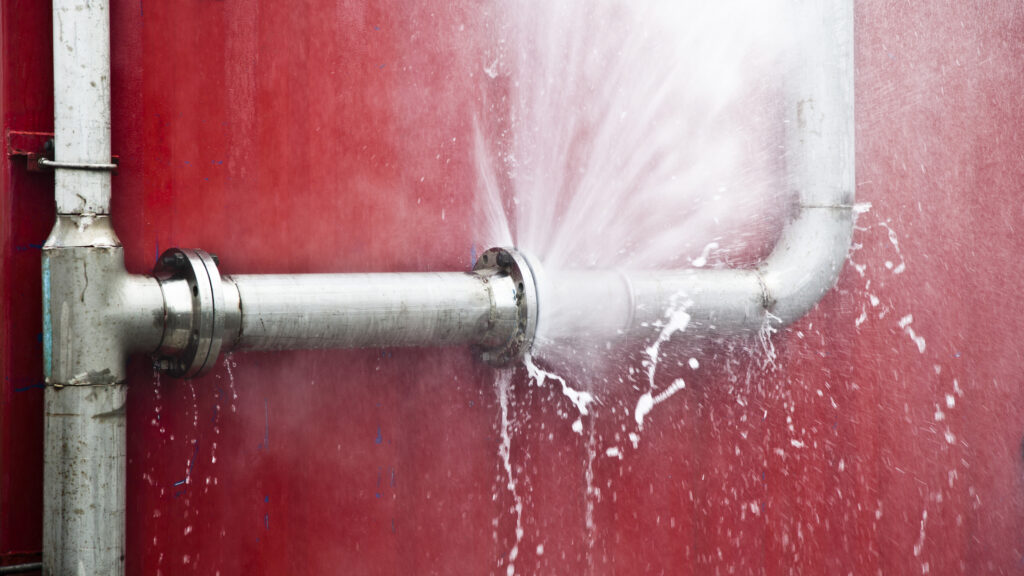
What to Do When a Pipe Bursts in Your Home:
How to Stop the Damage Fast
Few household sounds kickstart your heart quite like rushing water coming from a place water definitely shouldn’t be coming from.
A burst pipe releases water quickly. Even a relatively minor break can soak flooring, drywall, insulation, furniture, and more. Knowing what to do when a pipe bursts helps you minimize the damage and potentially saves you from a larger, more expensive restoration project.
Burst pipe priorities are simple: stop the water, stay safe, protect what you can, and start drying the affected areas immediately.
What to Do Immediately When a Pipe Bursts
When a pipe bursts in your home, you don’t have time for a 20-minute plumbing tutorial on YouTube.
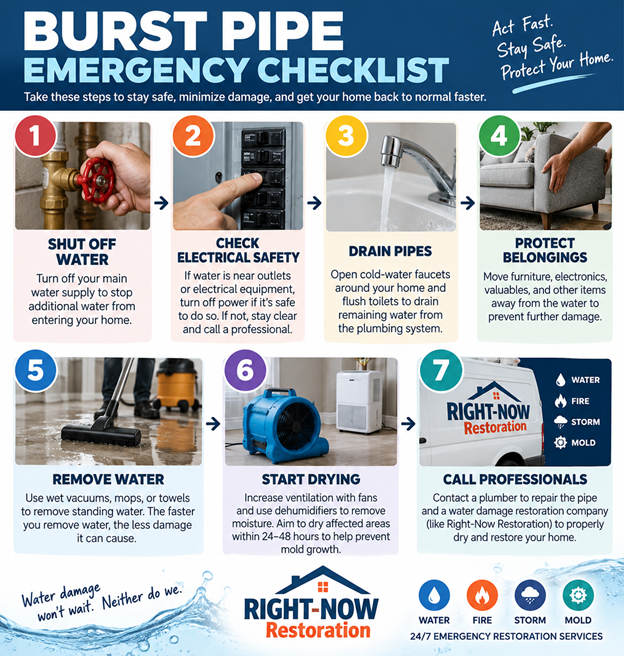
Your top priority is to shut off the main water supply ASAP.
If the water is close to electrical outlets, appliances, or wiring, shut off the power only if the breaker can be safely reached. Next, open faucets to drain the plumbing system. Finally, move your belongings away from the water and contact a professional plumber and a water damage restoration service.
Shut Off the Main Water Supply
In the harrowing melee of burst pipe mitigation, stopping additional water from entering your plumbing system is step one.
Find your home’s main water shutoff valve. Turn it completely off.
Depending on your home, the main shutoff valve could be in a basement, crawl space, utility room, garage, or near the main water line entrance. If you don’t know where yours is, try to find it before an emergency happens. A good rule of thumb is to make sure every member of the household can locate it.
Label your main shutoff valve with a brightly colored tag. Your future self, standing in ankle-deep water at 2 a.m., will thank you.
Turn Off Electricity Near the Affected Area
Water and electricity are an extremely dangerous combo.
If water has reached outlets, appliances, electrical equipment, or wiring, DO NOT under any circumstances attempt to enter the affected area until you’re sure it’s safe.
- Never enter a wet or flooded building while power is on.
- Never attempt to switch off a breaker if doing so requires standing in water.
If you’re able to safely access the electrical panel from a dry location, shut off power to the affected area. Otherwise, leave it to an electrician or emergency professional.
Drain the Remaining Water From Pipes
After you shut off the main water supply, open all cold-water faucets around the house. This relieves pressure and drains remaining water from your plumbing system.
Also, flush toilets once to empty their tanks. This won’t magically dry up the puddle that’s already on your floor. Unfortunately, plumbing tech has yet to achieve an “Undo” button, but these measures can definitely reduce the amount of additional water coming from the burst pipe.
Call a Plumber and Water Damage Professional
A plumber and restoration company are solutions to two different parts of the problem.
- A plumber repairs or replaces the failed pipe.
- A water damage restoration team addresses the water that already escaped. This includes water extraction, structural drying, moisture detection, and damage to materials.
Depending on the severity of the leak, you may need both.
What Causes Pipes to Burst?
Pipes can burst for a number of reasons. Understanding the specific cause can help you prevent a repeat occurrence.
Frozen Pipes in Winter
When water freezes, it expands, so ice in pipes results in extra pressure that can contribute to pipe failure. Pipes running through poorly heated areas like basements and crawl spaces are especially vulnerable during periods of extreme cold.
You can prevent frozen pipes by insulating at-risk plumbing and keeping indoor temperatures above 55° F. It’s also good practice to let faucets drip slightly when temperatures fall below 20°F.
High Water Pressure
Over time, excessive water pressure leads to extra stress on:
- Pipes
- Joints
- Valves
- Fixtures
If you hear a banging noise, notice frequent leaks, or experience unusually forceful water flow, have a professional check your water pressure and pressure regulator.
Old or Corroded Pipes
Unlike wine, plumbing doesn’t get better with age.
Older metal pipes corrode and weaken. This eventually leads to pinhole leaks or larger failures. It’s a good idea to schedule regular plumbing inspections, especially if you live in an older home with a history of leaks.
How to Minimize Water Damage After a Pipe Burst
Once the water is off and electrical hazards have been safely dealt with, attention shifts to the cleanup process.
What to Do Immediately |
Why it Matters |
|
Move furniture and valuables |
Prevents additional water exposure |
|
Remove standing water |
Limits material absorption |
|
Increase airflow |
Accelerates drying |
|
Run dehumidifiers |
Removes moisture from indoor air |
|
Photograph damage |
Creates documentation for insurance |
|
Check hidden areas |
Helps identify trapped moisture |
Use Wet Vacuums or Towels
DIY cleanup with towels, mops, and a wet/dry vacuum can help remove standing water but only if the water is clean and the amount is small.
- Never use an ordinary household vacuum to collect water.
A large amount of water is another story entirely. In this case, water can travel under flooring, behind baseboards, into drywall, and through ceilings. This means that while you can remove a visible puddle, moisture may still be trapped where you can’t see it.
Increase Ventilation and Airflow
Once it’s safe, use fans and ventilation to increase airflow through the affected area. Increasing air circulation speeds the drying process. At Right-Now Restoration, we use specialized air movers and other drying equipment to mitigate larger losses.
Don’t assume something is dry because its surface feels dry. Moisture can remain trapped under flooring and inside walls long after visible water is gone.
Use Dehumidifiers to Prevent Mold
Dehumidifiers help pull moisture from the air while damp materials dry.
Speed matters, so try to fully dry materials within 24–48 hours when possible to prevent mold growth. That timeframe is a big reason significant water damage shouldn’t be left to “air out” for a few days.
Does Homeowners Insurance Cover a Burst Pipe?
Usually, yes, but it also depends on why the pipe burst, what was damaged, and your policy’s terms.
The Insurance Information Institute notes that homeowners insurance generally provides coverage for water damage resulting from burst pipes. Coverage varies, however, and different causes of water intrusion may be treated differently.
After discovering a burst pipe:
- Photograph and video the affected areas before major cleanup when safe.
- Keep receipts related to emergency mitigation and repairs.
- Contact your insurance carrier promptly.
- Avoid throwing damaged materials away until you’ve documented them and confirmed what your insurer needs.
Talk with your insurer or agent to determine exactly what your individual policy covers.
When Should You Call an Emergency Plumber or Restoration Company?
Call an emergency plumber when you can’t stop the leak, aren’t sure where the failure occurred, or need the damage repaired immediately.
Call a professional water damage restoration company when the water has spread beyond a small, easily dried area, or if the water has reached drywall, insulation, carpeting, subflooring, ceilings, multiple rooms, or concealed spaces.
When DIY moisture removal within the 48-hour timeframe isn’t an option, professional drying becomes especially crucial.
Burst Pipe? Don’t Let a Plumbing Problem Become a Restoration Nightmare
Handling a burst pipe at home comes down to fast action while practicing safety. Just follow these steps:
- Shut off the water.
- Avoid electrical hazards.
- Drain the plumbing.
- Protect your belongings.
- Get the affected materials properly dried.
And remember: repairing the pipe only fixes the source. Water that’s already entered walls, floors, ceilings, or insulation still needs attention.
If a burst pipe has left your home soaked, contact Right-Now Restoration for around-the-clock emergency water damage restoration services. We’ll extract standing water, identify hidden moisture, dry affected materials, and limit secondary damage.
Because when there’s water running through your living room, “I’ll deal with it later” isn’t a realistic restoration strategy.