Main Water Shutoff Valve | How to Find It Fast
Why is your crawl space wet? Learn the common causes, risks of moisture damage, and effective ways to keep your crawl space dry.
How to Find the Main Water Shutoff When a Pipe Bursts
Picture this: a pipe bursts, water is flooding your home, and you’re wandering around asking, “Now, where’s that shutoff valve again?”
In the event of a burst pipe, every second counts. The longer water is allowed to flow from a failed pipe, the more opportunity it has to soak floors, walls, furniture, and other belongings. But if you already know where the main shutoff valve is located, you can stop the water quickly while you figure out what’s broken and what needs professional water damage attention.
The good news is that the main shutoff valve is typically located in a logical path between the municipal supply and your home’s plumbing. Here’s where to look, how to shut it off, and what to do immediately after water damage.
Where Is the Main Water Shutoff Valve?
Find your main water shutoff valve by following the incoming water line into your home. Top places to check include:
- Basements
- Crawl spaces
- Utility areas
- Garages
- Exterior walls
- Near the water meter
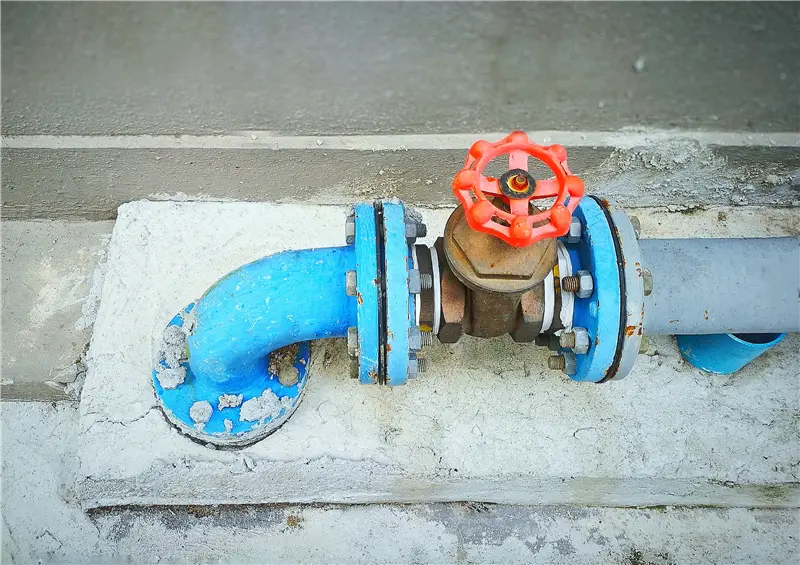
If you have a gate valve, close it by turning it clockwise. If you have a lever-style ball valve, close it by turning the handle 90 degrees until it is perpendicular to the pipe. Keep in mind that water shutoff valve types and their locations vary by home.
When in doubt, consider where the water service line enters your home. The main shutoff valve generally controls water entering the home, so it’s likely somewhere along that incoming supply line.
How Much Damage a Burst Pipe Causes Per Minute
There isn’t an exact “damage per minute” metric for burst pipes. How much water gets released depends on factors ranging from diameter and water pressure to the scale and location of the break.
The practical takeaway is simple: stop the water as soon as you safely can.
Remember, water can migrate beyond the obvious puddle into drywall, flooring, cabinets, insulation, and other porous materials. The likelihood of hidden water damage increases exponentially the longer water is allowed to flow.
Before grabbing towels, mops, and buckets, stop the source. A heroic DIY job doesn’t accomplish much if the pipe is still gushing water.
Why Every Homeowner Should Know This Location in Advance
Learning where the water shutoff valve is in the midst of a wildly spraying burst pipe is less than ideal.
The San Francisco Public Utilities Commission recommends knowing the location of your shutoff valve and how to operate it before an emergency occurs.
Once you find yours, make sure everyone in the household knows where it is. Also, consider adding a brightly colored tag to the valve so nobody has to become a plumbing Poirot during an emergency.
Common Locations of the Main Water Shutoff Valve
Homes are built differently. This means there’s no universal location, but there are good places to start.
Inside the Basement
If you have a basement, look along the foundation wall facing the street or wherever the water service enters the structure. Follow the main pipe and look for a valve before the plumbing branches out through the house.
Homes with crawl spaces usually have a similar arrangement near the service line entry point.
Near the Water Heater
The utility area around your water heater is another great place to look, especially if there are several plumbing components concentrated there.
But it’s important not to mix up your water heater’s individual shutoff with the main water shutoff. The main valve should control the entire home, not a single appliance.
Outside, Near the Water Meter
The shutoff could also be outside or just inside the property in line with the water meter. The EPA points out that water meters are commonly underground near the curb, although some are indoors, such as in basements.
Don’t assume you should open or operate the utility’s meter box yourself. Rules vary by utility. Some utilities restrict access to their equipment, so contact your water provider if you can’t locate or safely operate your home’s shutoff valve.
How to Locate and Turn Off the Main Shutoff
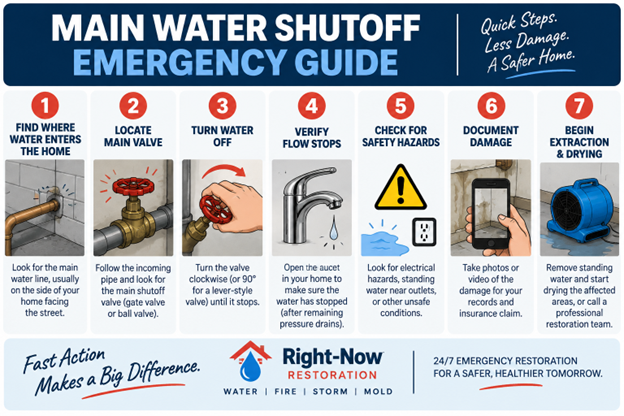
If water is already flowing from a burst pipe, use this seven-step sequence to find the main valve, stop the water, and begin the recovery process:
Check Where the Water Line Enters the House
Start on the side of the home facing the street or water supply. Look for the incoming service pipe. In basements and crawl spaces, it may penetrate a foundation wall or floor. Follow that pipe until you locate its first major shutoff valve.
Look Near the Water Meter
If you can’t trace the line from inside, find your water meter. This can give you a clue about the route the service line takes toward your home. Again, make sure you draw a clear distinction between your home’s shutoff and utility-controlled equipment.
Turn the Valve Clockwise to Shut Off Water
If you have an older wheel-style gate valve, turn the handle clockwise until it stops. SFPUC specifically recommends clockwise operation for this type of valve.
If you have a lever-style ball valve, it generally shuts off with a quarter-turn, leaving the handle perpendicular to the supply pipe.
If your valve is stuck or badly corroded, don’t force it. Excessive force might break it and turn one plumbing problem into two.
What to Do After You’ve Shut Off the Main Water Supply
Stopping water at the source is only step one. Once the supply is shut off, carefully assess the area.
If water has reached electrical outlets, appliances, wiring, or the electrical panel, DO NOT enter standing water or touch electrical equipment. Let professionals handle electrical hazards before starting the cleanup process.
Once it’s safe, document all visible damage with photos or video, move undamaged items away from wet areas, and start removing standing water. Significant water intrusion usually requires professional extraction, moisture detection, structural drying, and moisture monitoring. This will help mitigate a mold issue from moisture trapped in hard-to-spot places.
That’s where Right-Now Restoration comes in. Our emergency restoration team can assess how far the water traveled and begin extracting and drying.
Don’t assume a wall or floor that looks dry actually is dry. Water can easily seep under floors and into walls, places a surface inspection alone may miss.
How to Be Prepared for Future Emergencies
Dedicate five minutes out of a random Sunday to locate your main shutoff. This brief errand may save your future self a frantic search later. Label the valve clearly, keep its path unobstructed, and make sure everyone else in the house knows where it is and how it works.
Also, consider leak-detection or flow-monitoring technology. These systems can detect unusual water use or moisture and alert homeowners immediately. And depending on the system, they can even activate an automatic shutoff when you’re not home.
Stop the Water First, Then Stop the Damage.
A burst pipe is a major headache, but knowing exactly where the main water shutoff is gives you an extremely useful advantage: control over the source.
- Find the incoming water line.
- Locate the main valve
- Shut it down safely
- Verify that the flow has stopped
Then you can turn your attention to the water it left behind.
If a burst pipe has left standing water or soaked building materials behind, contact Right-Now Restoration for around-the-clock emergency water damage restoration. Fast action helps limit how far the damage spreads and gets the drying process underway ASAP.