Sewage Backup in Your Home? Steps to Take Right Away
What Should You Do After a Sewage Backup?
Few household disasters are worse than sewage bubbling up through your basement drain or overflowing from your toilet. It’s messy, smelly, and definitely not an activity on your weekend to-do list.
Unfortunately, a sewage backup is more than just a pungent plumbing problem. Contaminated wastewater can introduce all kinds of harmful microorganisms into your home, damage building materials, and create ideal conditions for mold growth.
Knowing what to do after a sewage backup can help keep your family safe, minimize property damage, and streamline the sewage cleanup process.
Safety Precautions Before Dealing With a Sewage Backup
Before dealing with a sewage backup, there are four key things you need to know:
- Stay out of contaminated areas
- Avoid touching wastewater
- Keep children and pets away
- Shut off electricity (only if it’s safe)
Sewage can contain harmful bacteria, viruses, and other contaminants. Always prioritize personal safety before attempting cleanup.
Avoid Direct Contact With Sewage Water
Sewage water can sometimes look relatively clear. Don’t assume it’s safe just because it’s not a sludgy brown or yellow mess. It may still contain human waste, disease-causing microorganisms, and chemical contaminants.
Also, avoid walking through the area or handling affected belongings.
Turn Off Electricity in the Affected Area
Water and electricity aren’t friends, especially when water damage reaches outlets, appliances, or electrical equipment. If you can safely reach the breaker panel, shut off power to the affected space. If not, wait for your utility provider or a qualified electrician.
Never enter standing water to reach a breaker box. Electrical hazards aren’t always obvious.
Wear Protective Gear
If you must enter an affected area for any reason and it’s safe to do so, wear waterproof boots, chemical-resistant gloves, and goggles. Ordinary household cleaning gloves and sneakers won’t cut it for serious sewage contamination.
Appropriate respiratory protection may also be needed depending on the severity of the situation.
Keep Children and Pets Away
Close off affected rooms to prevent children and pets from entering until professional cleanup is complete. Pets are particularly adept at investigating exactly what they shouldn’t, and a sewage backup is one scenario where curiosity may contaminate the cat.
What to Do After a Sewage Backup
Once everyone is safe, focus on:
- Stopping additional wastewater
- Limiting contamination
- Arranging professional assistance
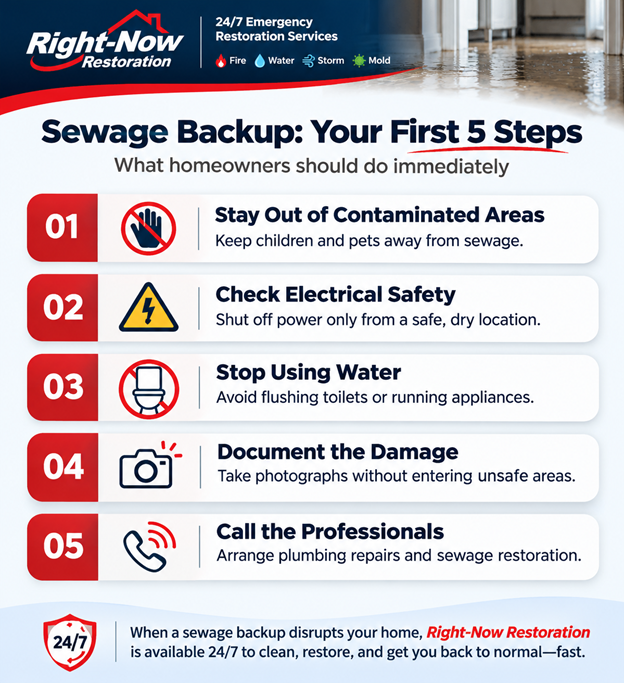
When it’s safe, take pictures or videos of visible damage before the cleanup process begins. These records can help support an insurance claim.
What Causes a Sewage Backup?
Knowing the cause of a sewage backup is essential to preventing another unpleasant surprise. Common culprits include:
- Plumbing obstructions
- Damaged sewer pipes
- Overwhelmed drainage systems
Clogged or Blocked Sewer Lines
Grease, wipes, paper products, and other debris can accumulate inside sewer pipes, restricting wastewater flow. The items should never be flushed. Despite some packaging claims, even “flushable” wipes can contribute to serious blockages.
Your toilet isn’t a trash can with a waterslide.
Tree Root Intrusion
Tree roots naturally seek out moisture and can enter sewer lines through small cracks or loose joints. As roots grow, they restrict flow and trap debris. This eventually leads to backups.
A plumber can check the line with a sewer camera to find the problem.
Heavy Rainfall & Municipal Overflow
Heavy rainfall can overwhelm sewer infrastructure, particularly in communities with combined sewer systems or where stormwater enters sanitary sewer lines. When system capacity is exceeded, wastewater backs up through lower-level drains.
If you’re wondering how to prevent a sewage backup, consider installing and maintaining a backwater valve, scheduling a sewer-line inspection every 1–5 years, and keeping unflushable items out of drains.
Health Risks of Sewage Exposure
Sewage backup health risks extend well beyond the obvious olfactory nightmare. Contaminated floodwater and sewage can expose people to microorganisms that cause illness.
Potential health concerns include:
- Gastrointestinal Illness: Exposure to pathogens can cause diarrhea, nausea, and vomiting.
- Skin and Eye Infections: Contaminated water can irritate skin or infect open wounds.
- Respiratory Irritation: Aerosolized contaminants and subsequent mold growth may aggravate respiratory conditions.
- Mold Exposure: Moisture left in walls, flooring, and insulation can encourage microbial growth.
People with weakened immune systems, young children, and the elderly are especially vulnerable.
If sewage touches your skin, wash the area thoroughly with soap and clean water. If contaminated water enters a wound or you develop symptoms after exposure, seek medical attention immediately.
How to Clean and Disinfect After a Sewage Backup
Proper sewage cleanup requires much more than a mop and bottle of over-the-counter disinfectant. Contaminated materials must be evaluated, removed when necessary, and thoroughly dried.
Professional sewage backup cleanup steps generally include:
- Assess Contamination: Identify affected areas and potential safety hazards.
- Extract Wastewater: Remove standing sewage using appropriate equipment.
- Remove Damaged Materials: Dispose of unsalvageable porous materials safely.
- Clean and Disinfect: Clean salvageable surfaces and apply appropriate disinfectants according to label directions.
- Dry and Verify: Use professional drying equipment and moisture measurements to confirm drying progress.
Cleaning and disinfecting are separate steps. Dirt and organic material must be removed for disinfectants to work effectively.
Important: Never mix bleach with ammonia or other cleaning chemicals.
For substantial contamination, professional restoration is the safest approach. Right-Now Restoration provides 24/7 emergency sewage and water damage restoration services to help homeowners address contamination, remove damaged materials, and restore affected spaces.
When sewage turns your home into a swampy mess, don’t wait for the damage to get worse. Contact Right-Now Restoration for immediate assistance and get your home back on the road to recovery.