Is Flood Water Dangerous? Home Safety Risks
Can Flood Water Make Your Home Unsafe?
A little water on the kitchen floor is an annoying chore. Six inches of mystery water in your basement is a different situation entirely.
Flooding doesn’t just leave behind soggy carpet and water-damaged furniture. It can introduce harmful bacteria, weaken building materials, create electrical hazards, and turn an otherwise safe and comfortable home into a potentially hazardous dwelling.
So, can flood water make your home unsafe? The short answer is yes. Unfortunately, the dangers aren’t always easy to spot once the water is gone.
Here’s what you need to know about flood water risks, warning signs, and when it’s time to call in the professionals.
Types of Flood Water and Their Risk Levels
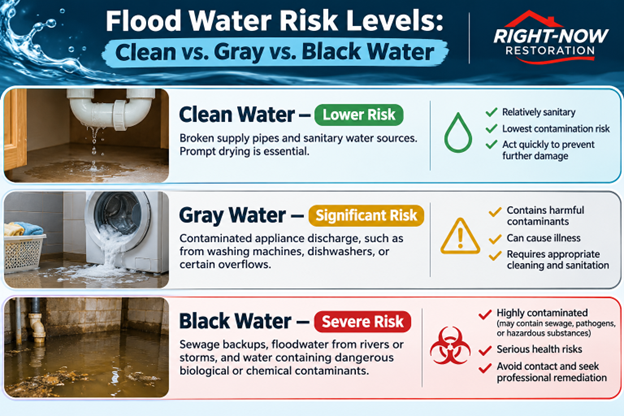
Flood water falls into three main categories: clean water, gray water, and black water.
- Clean water comes from relatively sanitary sources and presents the lowest initial contamination risk.
- Gray water contains potentially harmful contaminants.
- Black water is highly contaminated and may contain sewage, pathogens, or hazardous substances.
All three require fast action. Understanding these categories helps explain why flood water is unsafe and what cleanup methods are needed.
Clean Water
Clean water usually comes from broken supply lines, overflowing sinks (without contaminants), or malfunctioning appliances connected to clean water supplies. Although clean water is initially low-risk, it can become contaminated if it comes into contact with dirty surfaces or if it’s left untreated.
Never assume clear water is clean water. The source of the water matters a lot more than its appearance.
Gray Water
Gray water contains a significant amount of contaminants. It typically comes from washing machine discharge, dishwasher leaks, or certain appliance overflows. Exposure may cause illness, especially if the water contains detergents, microorganisms, or organic waste.
Black Water
Black water is the most hazardous category. It includes sewage backups, floodwater from rivers or storms, and water with dangerous biological or chemical contaminants. This type of water damage requires specialized protective equipment, containment procedures, and professional cleanup.
A floor that feels dry to the touch may still retain moisture trapped underneath. Professional moisture meters help find hidden water damage before mold growth becomes a larger problem.
Warning Signs Your Home Isn’t Safe After a Flood
If you find yourself wondering if it’s safe to stay in a home after flooding, the answer depends on the level of contamination, structural damage, and whether essential systems are safe.
Watch for these red flags:
- Sewage odors or discolored water signal possible contamination that requires specialized cleanup.
- Sagging ceilings or buckling floors mean that building materials may be compromised.
- New foundation cracks or leaning walls could indicate structural instability.
- Sparking outlets or submerged electrical equipment pose an immediate electrical danger.
- Visible mold or persistent musty smells are signs of ongoing moisture problems.
- Standing water near electrical systems is a serious shock and fire risk.
If you notice signs of structural instability, electrical hazards, or any amount of sewage contamination, stay away from the affected area until professionals confirm it’s safe.
How to Stay Safe When Dealing With Flood Water
When flooding happens, your priority isn’t saving the carpet and your favorite recliner. It’s protecting yourself and everyone else in your home.
Start with these six precautions:
- Avoid entering contaminated or electrically hazardous areas. Keep children and pets away.
- Shut off utilities when it’s safe to do so. Never approach electrical equipment through standing water.
- Identify the water source. Stop a plumbing leak if you can do so without danger.
- Document visible damage. Take photographs or videos from a safe location for insurance purposes.
- Avoid DIY sewage cleanup. Contaminated water requires appropriate protective equipment and procedures.
- Arrange professional water extraction and drying. Hidden moisture can continue damaging materials after standing water is removed.
If flooding affects your home’s electrical system, structural stability, or sanitary conditions, arrange a professional safety assessment before deciding whether to stay in your home overnight.