Protect Your Furniture From Water Damage: A Quick Guide
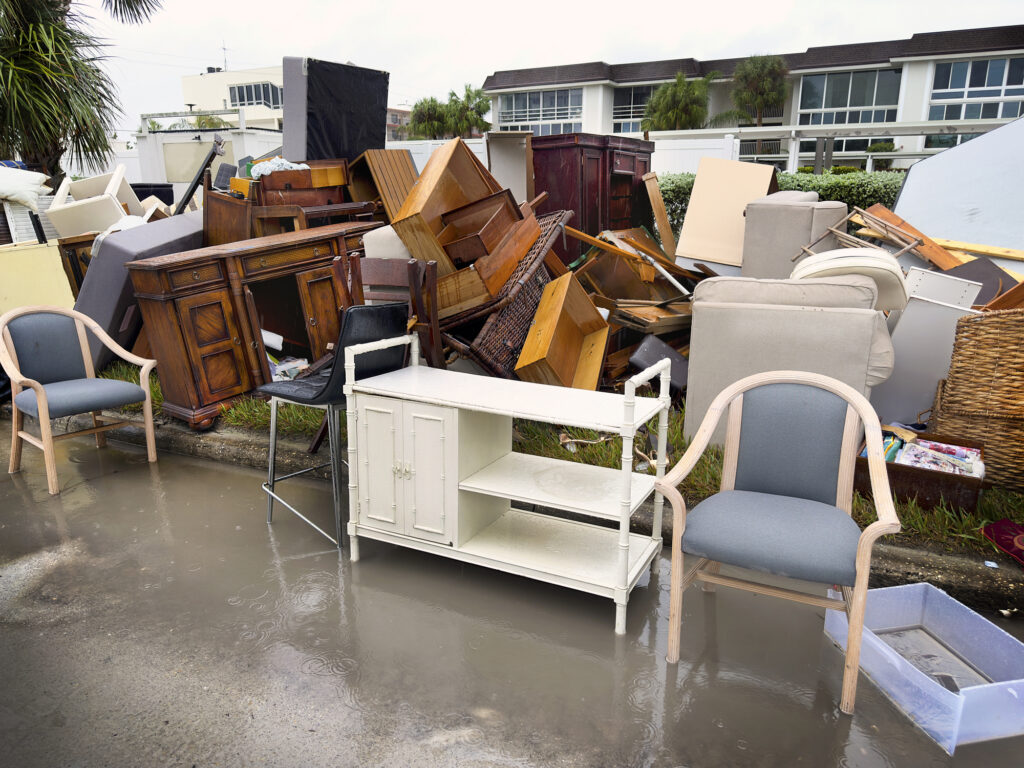
How to Protect Furniture After Water Gets Into Your Home
Water has the annoying habit of showing up where it doesn’t belong. One day, your living room is perfectly dry and cozy. The next day, your favorite sofa is soaking wet, your coffee table is sitting in a puddle, and you’re left wondering, “What can be saved?”
The good news is that water exposure doesn’t automatically mean your furniture is headed for the curb. Knowing how to protect furniture from water damage makes all the difference between a successful recovery and an expensive shopping trip.
Your response time matters because moisture can warp wood, ruin upholstery, and create conditions for mold growth in 24–48 hours. Here’s how to protect your furniture, dry it safely, and know when it’s time to call in the professionals.
Immediate Steps to Protect Furniture When Water Enters Your Home
To protect furniture from water damage:
- Move items away from standing water.
- Elevate furniture legs.
- Remove wet cushions and drawers.
- Gently wipe down exposed surfaces.
Once the area is safe, ensure good airflow and reduce humidity to limit moisture absorption, warping, and mold. Never handle furniture or any other items that have been exposed to sewage or contaminated floodwater.
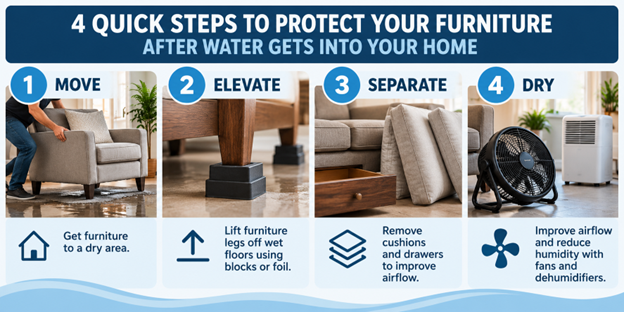
Move Furniture to a Dry Area
If and when it’s safe to do so, move furniture to a dry, well-ventilated room. Start with upholstered pieces, antiques, and wooden furniture, which can absorb the most moisture.
Before you move anything, check for electrical hazards, structural damage, and contaminated water. Never enter standing water near potentially energized outlets or appliances.
Photograph or video all damaged furniture before moving it. Your insurance company will need clear documentation of damage and its original location.
Elevate Furniture Legs with Blocks or Foil
Can’t move that massive sectional? Raise furniture legs above damp flooring using sturdy, waterproof blocks.
Aluminum foil or plastic furniture tabs can temporarily separate furniture legs from wet carpet. This helps prevent stains and moisture transfer, but it won’t protect furniture left in standing water.
Remove Cushions and Drawers
Take cushions off of sofas and chairs to expose damp areas and improve airflow. Stand cushions separately with space between them.
Remove drawers from wooden furniture when they slide freely. If drawers are swollen and hard to open, don’t force them. This may damage the wood or hardware.
Wipe Down Wet Surfaces Immediately
Use clean, absorbent towels to blot and dab moisture from hard surfaces. You want to avoid aggressive scrubbing, especially on delicate wood finishes and leather. For upholstery, blot rather than rub. This will prevent spreading moisture deeper into the fabric.
And remember: A dry-looking surface doesn’t mean the material underneath is dry.
How to Protect Different Types of Furniture From Water Damage
Different materials have different reactions to moisture. Your wooden dining table and fabric sofa may share a room, but they definitely don’t share the same drying process.
Wooden Furniture
Wood is porous and absorbs moisture, causing swelling, warping, and sometimes irrevocable damage.
To minimize problems:
- Blot standing moisture immediately.
- Remove damp items resting on wooden surfaces.
- Allow gradual drying with controlled airflow.
- Avoid placing furniture near heaters or fireplaces.
Solid wood may be salvageable, while particleboard and some veneered pieces are more vulnerable to swelling and separation.
Upholstered Furniture & Sofas
Upholstery is more challenging to dry because water can penetrate fabric, padding, and internal frames. If the furniture was exposed to clean water, prompt professional extraction and drying can help save it.
On the other hand, furniture soaked with sewage or contaminated floodwater needs to be disposed of because padding can retain harmful contaminants.
Leather Furniture
Leather and water don’t get along.
Dab moisture gently with a soft cloth and allow the furniture to dry gradually at room temperature. Keep it away from direct heat, which can lead to stiffness and cracks in the leather.
Once it’s thoroughly dry, use a manufacturer-approved leather conditioner if appropriate.
For valuable antiques, specialty upholstery, or expensive leather furniture, talk to a qualified furniture conservator before attempting further cleaning.
Best Ways to Dry Wet Furniture Safely
The goal of drying wet furniture is to remove moisture without causing additional damage. Unfortunately, cranking up the heat isn’t the surefire shortcut you might think.
Use Fans and Dehumidifiers
Fans improve airflow, while dehumidifiers pull extra moisture out of the surrounding air. For clean-water incidents, place fans strategically to circulate air around furniture rather than focusing the air directly on delicate surfaces.
The EPA recommends drying water-damaged materials within 24–48 hours when possible to help prevent mold growth.
Note: Don’t let fans blow across suspected mold or contaminated materials. This can spread contaminants and help mold proliferate in other areas of your home.
Avoid Direct Sunlight or Heat
Direct sunlight and excessive heat can fade fabrics, crack leather, and cause wooden furniture to dry unevenly. A shaded, well-ventilated environment is much safer for your belongings.
Gentle, controlled drying is always better than blasting your favorite recliner with a space heater.
Separate Furniture From Walls and Floors
Leave several inches between furniture and surrounding walls to boost airflow. Place recoverable items on clean, dry supports to ensure moisture isn’t trapped under furniture legs or upholstery.
For heavily saturated pieces, professional drying equipment and moisture measurements may be necessary.
How to Prevent Mold Growth on Water-Damaged Furniture
A major challenge when trying to save furniture after flood or plumbing damage is mold prevention.
Mold can begin developing on damp materials within a day or two under favorable conditions, especially when moisture gets trapped in upholstery, padding, or wood.
To prevent mold on water-damaged furniture:
- Act Fast: Begin safe drying as soon as possible.
- Control Humidity: Aim for indoor relative humidity below 60%, ideally between 30% and 50%.
- Inspect Hidden Areas: Check cushion interiors, undersides, joints, and drawers.
- Don’t Cover Damp Furniture: Plastic coverings can trap moisture.
- Discard Unsalvageable Materials: Heavily contaminated porous furniture may be impossible to clean safely.
Don’t spray bleach onto upholstered furniture as a quick fix. It won’t reliably address deep-cushion contamination, and it will likely damage and stain fabrics.
A musty smell after drying may indicate hidden moisture or mold growth. Don’t assume the problem is solved simply because the surface looks and feels dry.
Signs Your Furniture Is Beyond Repair
Despite your best efforts, sometimes furniture simply isn’t salvageable. Recognizing the warning signs helps prevent unnecessary expenses and lingering contamination.
|
Warning Sign |
What it Could Mean |
|
Severe swelling or warping |
Wood or particleboard has suffered structural damage |
|
Persistent musty odors |
Moisture or contamination remains trapped inside |
|
Visible mold growth |
Materials may require specialized remediation or disposal |
|
Collapsing cushions or padding |
Internal materials have deteriorated |
|
Sewage or floodwater saturation |
Porous furniture may be unsafe to retain |
Before you discard any furniture, consider whether professional restoration can help. Some solid-wood pieces and specialty furnishings can be saved, even when the damage looks beyond repair.
But when furniture is heavily saturated, contaminated, or showing signs of serious deterioration, replacement may be the safest option.
Right-Now Restoration provides 24/7 emergency water damage restoration services to help homeowners address water intrusion before the damage spreads. From water extraction and structural drying to moisture assessment and mold remediation, our team can help you determine the safest path forward.
Water doesn’t wait, and neither should you. Contact Right-Now Restoration today for emergency assistance and help protecting your home and belongings.